
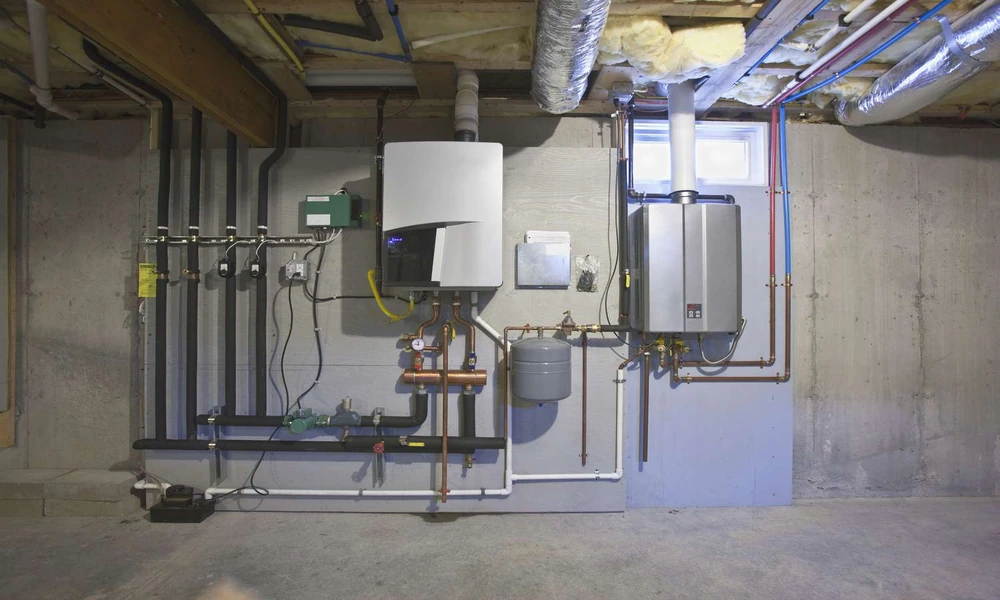
The old tank in the basement is twelve years old, the bottom is crusted with white mineral, and it rumbles every time the burner kicks on. That is usually the moment people start wondering whether the next water heater should be a tankless unit hung on the wall instead. The pitch is appealing. Endless showers, lower gas bills, a machine that lasts twice as long. In a region where the tap water is loaded with minerals, though, the real answer depends on a few details the brochures tend to skip.
Those details are worth talking through with a La Port plumber who works on both sides of the equation. GoodMan Plumbing installs and repairs tank and tankless water heaters, sets up softeners and BritaPro filtration, and handles the gas line work a tankless conversion often needs. The veteran owned company runs out of La Porte and Granger and offers financing for larger projects like this one.
The Promise on Paper
Tankless heaters, sometimes called demand or instantaneous heaters, warm water only when a tap opens. No tank sits in the basement holding forty or fifty gallons at temperature all day and night, so there are no standby losses. According to the U.S. Department of Energy’s guide to tankless water heaters, homes that use around 41 gallons of hot water a day or less can see these units run 24 to 34 percent more efficiently than a conventional tank, while heavy users closer to 86 gallons a day see a smaller gain of roughly 8 to 14 percent. Most tankless units are expected to last more than 20 years, compared with 10 to 15 for a typical tank.
They also free up floor space, which matters in a finished basement or a tight utility closet. And because nothing stores water under pressure, there is no tank to rust through and flood the floor one morning.
Winter Changes the Math
Here is the part that catches northern Indiana homeowners off guard. A tankless heater is rated by how much it can raise the temperature of water passing through it, and that depends on how cold the water arrives. Groundwater here runs cold in winter, often around 50 degrees, and heating it to 120 means asking the unit for a 70 degree rise.
Run the numbers on a typical large gas unit rated near 199,000 BTU. At that rise, it delivers somewhere around five gallons per minute. A modern showerhead uses about two, so two showers and a dishwasher at once is manageable, but add a washing machine on warm and someone will notice. A whole house electric unit is a different story. Even a big 27 kilowatt model manages only about two and a half gallons per minute at that rise, which is barely one comfortable shower in January. That is why the Department of Energy notes gas units deliver higher flow rates, and why electric tankless works best in small homes or as a point of use booster.
The Hard Water Clause
The City of La Porte reports its water hardness at roughly 19 grains per gallon, which is very hard by any standard, and private wells around the county are often similar. That matters more for a tankless unit than for a tank.
Inside a tankless heater, water flows through a narrow heat exchanger that gets extremely hot in seconds. Hard water drops calcium and magnesium scale on those surfaces quickly. As scale builds, efficiency drops, flow can choke down, and the unit may throw error codes or shut itself off to protect the exchanger. Many manufacturers write hardness limits and maintenance expectations into their warranties, so a unit that scales up from untreated water may not be covered.
None of this rules tankless out. It simply means the decision usually comes as a pair. Most hard water homes that go tankless either add a softener or scale reduction system ahead of it, or commit to flushing the heat exchanger with a descaling solution at least once a year. Skipping both is the fastest way to turn a 20 year appliance into a 6 year headache.
What Changes Behind the Wall
Swapping a tank for a tankless unit is rarely a straight trade. The installation itself often involves several upgrades that belong in the budget from the start.
- Gas supply. A large tankless unit can draw four or five times the gas of a standard tank, and the old half inch line feeding the water heater often cannot keep up. A bigger line from the meter is a common addition.
- Venting. Most high efficiency units vent through the side wall with PVC rather than up the old chimney. If a furnace still shares that chimney, removing the water heater can leave it oversized for the furnace alone, which needs checking.
- Condensate. Condensing units produce acidic water that needs a drain and often a neutralizer.
- Electricity. Gas units still need a standard outlet for controls and fans. Electric whole house units may require 100 amps or more on their own, which can mean a panel upgrade.
The Small Quirks Nobody Mentions
Living with tankless takes a little adjustment. Most units need a minimum flow, often around half a gallon per minute, before the burner fires, so a faucet barely cracked open for rinsing may stay cold. Some homes notice a brief burst of cold between two hot draws, sometimes called a cold water sandwich. And hot water still takes the same time to travel from the heater to a distant bathroom. A recirculation loop or pump can solve that, but it adds cost and some of the energy savings slip away.
So Who Comes Out Ahead?
The household that tends to win with tankless is the one with steady, moderate hot water use, a gas line that can be upgraded without drama, and a plan for hard water. A couple or small family in a gas heated home, willing to add a softener and keep up annual flushing, can expect lower bills and a heater that outlasts several tanks.
The case gets weaker for a big family that runs multiple showers, laundry and dishes at the same time on winter mornings, or for an all electric home without spare panel capacity. In those homes, a high efficiency tank or a heat pump water heater may deliver more comfort per dollar.
Hard water does not cancel the benefits of going tankless. It just moves water treatment from an optional extra to part of the purchase, and that is the piece worth getting right before the old tank comes out.
