
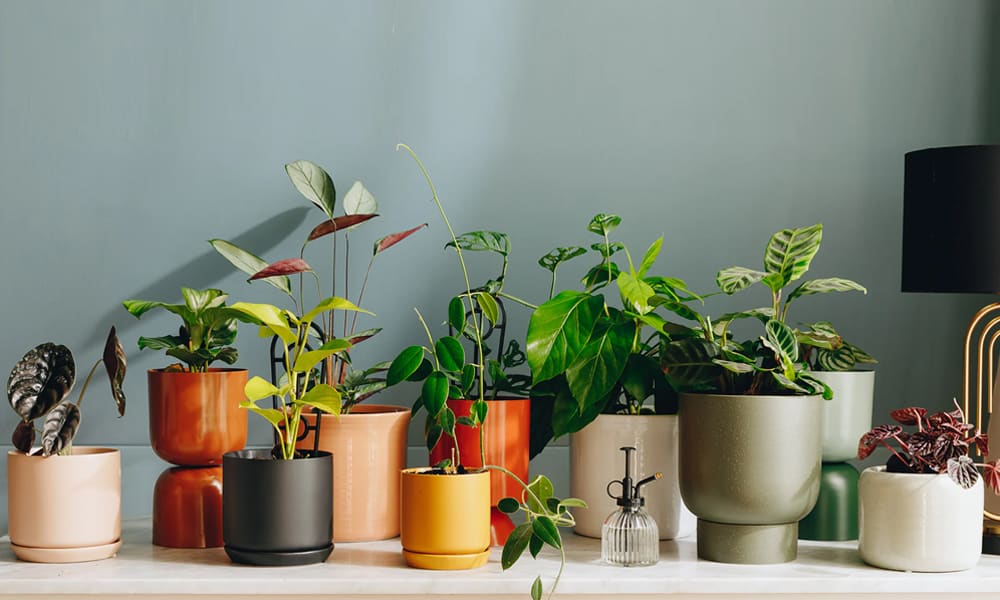
Indoor plants have, in many households across Austin, gone beyond being just a trend; they are now part of a larger movement towards nature-influenced, aesthetically pleasing homes. People who are picking up a pot for a plant at a store in Austin, TX usually start with the idea of decorating simply, but soon they realize how the pots can change the whole visual balance of a room. Choosing a pot not only affects the size and the texture of the room, but also the amount of light perceived. To see more cohesive interior results, attention must shift from the plant alone to the vessel that holds it.
The Role of Planters in Interior Design
Planters serve as architectural highlights in a living room. Just like light fixtures or accent chairs, they add structure and contrast to the space. A tall cylindrical planter may naturally make people look up, thus it highlights the ceiling height, whereas a wide, low container can visually anchor a seating area.
The choice of materials also significantly influences the role of planters. Ceramic pots bring in a sense of elegance and sophistication, thus they are great companions of contemporary or minimalist interiors. Terracotta provides a warm and rough surface, thus it blends well with rustic or bohemian environments. Matte surfaces make the overall atmosphere lighter, whereas glossy ones reflect light and bring in a delicate visual charm.
By purposefully picking the shapes and finishes that resonate with the existing decor, like using metallic planters that match the brass light fixtures or coordinating neutral shades with the upholstery, planters turn into a part of the design concept rather than just an afterthought.
Creating Visual Balance and Proportion
When introducing planters into a living room, one of the key factors to consider is scale. A small planter next to a large sectional sofa may look insignificant, while a giant planter in a small room can be overpowering.
Interior designers suggest that the depth can be achieved by mixing the heights of the planters. A set of three different height planters, tall, medium, and small, will set the pace and bring variety. By placing bigger pots in the corners or next to the media unit, the sharpness of the edges gets softened, and there is an introduction of visual organic contrast of the architectural straight lines in the living space.
Color matching is another element that contributes to the harmony in a living room. Neutral color pots, such as white, beige, gray, or muted earth shades, can easily go with almost any decor style. On the other hand, if one wants their planter to be a statement piece, a brightly colored planter in deep green, navy, or terracotta red can become the focal point of the room, accentuating the accent cushions or artwork.
Enhancing Natural Light and Texture
One of the greatest perks of living rooms is the relationship between daylight and plants. Pots with pale, colored shades can greatly increase the level of light, which is especially true for rooms with big windows that are typical of warm places like Central Texas. Moreover, the light that has been reflected can be bounced to various parts of the room, thus the light can be increased subtly.
Another thing that texture gives us is the addition of one more layer of interest. For instance, ribbed ceramics, woven baskets, or stone-textured containers form a tactile contrast with smooth floors and painted walls. In addition, when these textures are combined with green plants, they not only produce a sense of depth but also give a feeling of completeness and intention to the whole work.
By placing the planters close to the windows, on the coffee table, or in the empty corners, the greenery will be naturally present in the daily living spaces, thus, no one will have to worry about the flow of the movements being blocked or the surfaces being cluttered.
Defining Zones Within Open Layouts
Open-concept living rooms, which are very common in today’s homes, often lack clear visual boundaries. Plants can be used as subtle dividers. Tall plants in big pots can separate the living area from the dining area without the need for a permanent wall.
In a small apartment, a plant placed near a chair can help create a cozy corner. On the other hand, two matching plants on either side of a table or fireplace give the room a sense of order and emphasize the architectural features.
Moreover, planters being movable give the homeowners an option of changing the arrangement. By changing the positioning of the plants, people can give the whole room a new look. This way, planters are excellent tools for continually upgrading homes.
A Simple Yet Impactful Upgrade
Decorative planters are a great way to liven up a living room, and one does not need to do a major renovation or spend a lot of money. It is more about choosing and placing carefully. Thus, even in a neutral-toned room, planters can add life to and make it a friendly and lively space if they take into account their size, material, and color.
When people go to a plant pot store in Austin, TX, they will probably get attracted to the plants, but it is often the container that gives the whole look its character. If done right, planters can enhance homes not only by providing utility but also beauty, as they are like pieces of art. If one wants to create more beautiful changes in their living room, they can start to see more on websites and other resources.
